2011年8月31日 星期三

賈伯斯的管理十誡

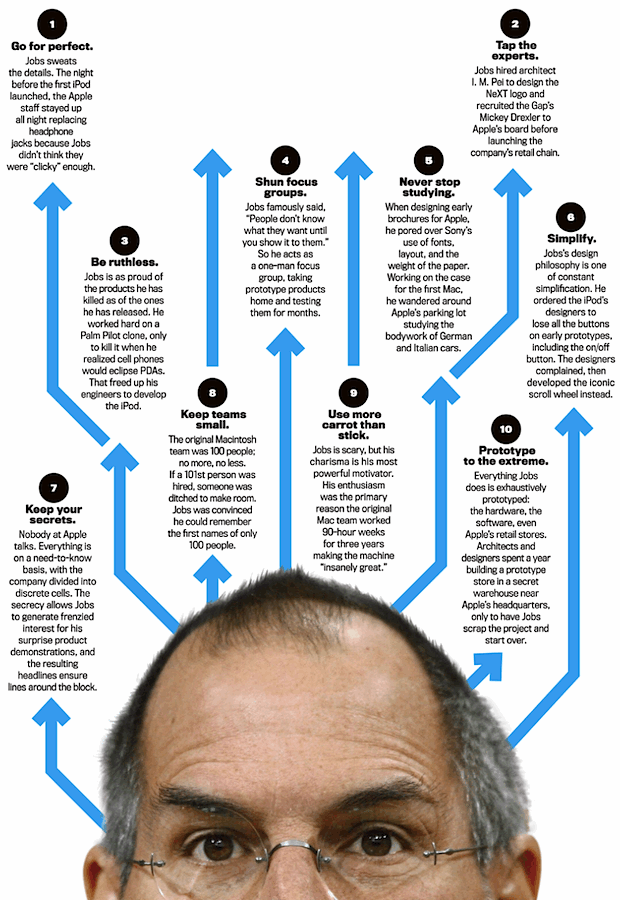
The 10 Commandments of Steve Jobs


1.  追求完美  Go for perfect
賈伯斯非常注重細節,蘋果員工在 iPod 推出的前一晚徹夜加班替換耳機插頭,因為賈伯斯認為用起來不夠順暢。
2.  指定專家  Tap the experts
賈伯斯離開蘋果創立 NeXT 公司時請貝聿銘設計 logo,在建立蘋果的零售通路前,找來 Gap 的CEO Drexler 擔任蘋果董事。
3.  冷酷無情  Be ruthless
賈伯斯對腰斬的產品一樣引以為榮。蘋果與 Palm 曾合作一款低價 Mac 版 PDA,當賈伯斯意識到 PDA 將被手機取代後立刻喊停,促成iPod的研發。
4.  拒絕市調  Shun focus groups
賈伯斯說過,「人們唯有在看到東西時,才知道自己要什麼」,所以他自己就是「焦點團體」,親自測試產品達數月。
5.  不斷學習  Never stop studying
賈伯斯設計蘋果早期的宣傳品時曾研究 Sony 文宣的字體、版面編排與重量。設計第一部麥金塔電腦的外殼時,賈伯斯到公司停車場研究德國和義大利汽車的車身。
6.  化繁為簡  Simplify
不斷簡化是賈伯斯的設計哲學,他下令 iPod 設計團隊拿掉原型機上全部的按鈕,連開關鍵都不要,最後開發出點按式選盤。
7.  保密防諜  Keep your secrets
蘋果內部每個人的所知都僅限於分內須知的部分,高度保密讓賈伯斯能夠盡情發展出驚天動地的商品,且不怕消息走漏。
8.  精簡組織  Keep teams small
麥金塔電腦的原始團隊正好一百人,如果增聘一人,表示有人要走路。賈伯斯自認只記得住一百個人的名字。
9.  恩威並重 Use more carrot than stick
賈伯斯固然令人生畏,但他的領袖魅力是最大的動力來源,讓麥金塔電腦團隊連續三年每周工作九十小時,設計出讓世人驚嘆的作品。
10. 極致樣品  Prototype to the extreme
無論是軟硬體或零售店,賈伯斯對樣品的要求極高。建築師曾花了一年在蘋果總部附近的秘密倉庫內蓋了一間零售店樣品屋,賈伯斯看過後下令拆除,重新開始。

圖片   2011年8月28日 《美國新聞周刊》Newsweek
翻譯   2011年8月31日 《聯合報》

相關文章:
賈伯斯的簡報秘訣
R.I.P Steve Jobs (2011-10-06)

2011年8月23日 星期二

葡萄催芽劑中毒

奪命晚餐 4人暴斃 死狀詭異
「沒見過這麼離奇的案子」

2011年 7月7日 蘋果日報  

情殺奪4命 南投神祕中毒大逆轉
2011年 8月23日 蘋果日報  


ETHYLENE CHLOROHYDRIN
Ethylene chlorohydrin, a cellulose ester solvent, is a colorless liquid with an odor resembling a mixture of ethyl alcohol and ether. Ethylene chlorohydrin is used as a solvent in industry. 
In agriculture, it is used to speed up sprouting of potatoes, to treat seeds to inhibit biological activity, and to hasten grape germination.

CLINICAL EFFECTS
SEVERE
Nausea, vomiting, coma, seizures, tachycardia, GI bleeding, metabolic acidosis, hypotension, and respiratory failure. Reported deaths have been due to metabolic acidosis and respiratory failure.
MILD/MODERATE
Nausea, vomiting, tachycardia, tachypnea, weakness, lethargy, transient confusion, sore throat or mouth pain, dizziness, transient hypertension, hypokalemia and transient renal insufficiency.
ONSET
Toxic effects generally develop within 2 hours after exposure.
VITAL SIGNS
Tachypnea, hypotension, and irregular pulse.
CARDIOVASCULAR
Circulatory shock and sinus tachycardia.
RESPIRATORY
Respiratory tract irritation, cough, and respiratory failure, non-cardiogenic pulmonary edema, capillary engorgement, and interstitial hemorrhages of the lungs.
NEUROLOGIC
Incoordination, vertigo, confusion, paresthesias, spastic contracture of the hands, seizures, cerebral edema, giddiness, headache, CNS depression, weak or absent reflexes, paralysis, and mental disturbances.
GASTROINTESTINAL
Nausea and vomiting.
HEPATIC
Liver glutathione depletion, inactivation of drug-metabolizing enzymes, hemorrhage, liver damage, and hepatic necrosis.
ACID-BASE
Metabolic acidosis.

PATIENT DISPOSITION
All symptomatic patients should be admitted to the hospital.
Symptoms may occur within 3 hours of exposure. Symptomatic patients should be monitored for at least 48 hours for level of consciousness, respirations, seizures, and BP.
ORAL/PARENTERAL EXPOSURE
Do NOT induce emesis
GASTRIC LAVAGE
Consider after ingestion of a potentially life-threatening amount of poison if it can be performed soon after ingestion (generally within 1 hour).
ACTIVATED CHARCOAL
SEIZURES
Administer a benzodiazepine IV.
Consider phenobarbital or propofol if seizures recur after diazepam 30 mg (adults) or 10 mg (children > 5 years).
Monitor for hypotension, dysrhythmias, respiratory depression, and need for endotracheal intubation. Evaluate for hypoglycemia, electrolyte disturbances, hypoxia.
ACUTE LUNG INJURY
Maintain ventilation and oxygenation and evaluate with frequent ABG or pulse oximetry monitoring.
HYPOTENSION
Infuse 10 to 20 mL/kg isotonic fluid. If hypotension persists, administer dopamine or norepinephrine

EXPERIMENTAL THERAPY
ETHANOL THERAPY
Ethanol (ETOH) partially inhibits the formation of toxic metabolites.
LOADING DOSE:
Administer 10 mL/kg of 10% ETOH in D5W over 30 minutes.
MAINTENANCE DOSE
Administer 1 to 2 mL/kg/hr of 10% ETOH in D5W by IV infusion. Aim at achieving and maintaining 100 to 130 mg/mL blood ethanol levels.

N-ACETYLCYSTEINE (NAC)
N-Acetylcysteine (NAC) may be helpful to promote resynthesis of glutathione in liver cells and increase conjugation and detoxification.
ORAL NAC DOSING
loading dose of 140 mg/kg followed by 70 mg/kg administered every 4 hours.
IV NAC DOSING
150 mg/kg NAC in 200 ml of D5W administered over 15 minutes followed by 50 mg/kg in 500 ml D5W over the next 4 hours. Finally, 100 mg/kg NAC in 1000 ml D5W over the next 16 hours. 

Reference: 
POISINDEX® Managements 
Last Modified: May 13, 2011

2011年8月17日 星期三

Guidelines for Identification of C-Spine Injuries


Practice Management Guidelines for Identification of Cervical Spine Injuries Following Trauma:
Update From the Eastern Association for the Surgery of Trauma Practice Management Guidelines Committee
J Trauma. 2009;67: 651–659

Recommendations

a. Removal of cervical collars:
  • Cervical collars should be removed as soon as feasible after trauma (level 3).
b. In the patient with penetrating trauma to the brain:
  • Immobilization in a cervical collar is not necessary unless the trajectory suggests direct injury to the C-spine (level 3).
c. In awake, alert patients with trauma without neurologic deficit or distracting injury who have no neck pain or tenderness with full range of motion of the C-spine:
  • C-spine imaging is not necessary and the cervical collar may be removed (level 2).
d. All other patients in whom C-spine injury is suspected must have radiographic evaluation. This applies to patients with pain or tenderness, patients with neurologic deficit, patients with altered mental status, and patients with distracting injury.
  • The primary screening modality is axial CT from the occiput to T1 with sagittal and coronal reconstructions (level 2).
  • Plain radiographs contribute no additional information and should not be obtained (level 2).
  • If there is neurologic deficit attributable to a C-spine injury:
  • Obtain spine consultation.
  • Obtain MRI.
  • For the neurologically intact awake and alert patient complaining of neck pain with a negative CT:
Options:
  1. Continue cervical collar.
  2. Cervical collar may be removed after negative MRI (level 3).
  3. Cervical collar may be removed after negative and adequate F/E films (level 3).
    • For the obtunded patient with a negative CT and gross motor function of all four extremities:
    • F/E radiography should not be performed (level 2).
    • The risk/benefit ratio of obtaining MRI in addition to CT is not clear, and its use must be individualized in each institution (level 3). Options are as follows:
    1. Continue cervical collar immobilization until a clinical examination can be performed.
    2. Remove the cervical collar on the basis of CT alone.
    3. Obtain MRI.
    • If MRI disclosed nothing abnormal, the cervical collar may be safely removed (level 2). 


      National Emergency X-radiography Utilization Study Low-Risk Criteria (NEXUS NLC)
      N Engl J Med. 2000;343:94 –99
      A patient’s neck can be clinically cleared safely without radiographic imaging if all five low-risk conditions are met:
      1. No posterior midline neck pain or tenderness
      2. No focal neurological deficit
      3. Normal level of alertness
      4. No evidence of intoxication 
      5. No clinically apparent, painful distracting injury


      Canadian C-spine Rules (CCR) 
      N Engl J Med. 2003;349:2510 –2518
       

      2011年8月10日 星期三

      賈伯斯的簡報秘訣


      賈伯斯簡報的15個秘訣
      Steve Jobs' Presentation Secrets
      Fifteen Strategies You Can Employ Now

      《大家來看賈伯斯:
      向蘋果的表演大師學簡報》
      The Presentation Secrets of Steve Jobs: How to be Insanely Great in Front of Any Audience
      美商麥格羅.希爾 2010年3月3日出版
      文章節錄自 美國《商業周刊》 BusinessWeek, by Carmine Gallo

      1. 模擬電影的策劃  Plan in Analog
      賈伯斯的簡報具備的電影所有元素:英雄、反派和震撼的視覺效果。
      記住,你是才昰說故事的主角,投影片只是輔助。
      2. 專注於聽眾利益  Focus on Benefits
      回答聽眾心中唯一在乎的問題:我為什麼要來聽你簡報?
      “為什麼要買 iPhone?”
      “愛上 Mac 的十大理由!”
      沒人關心你的產品或服務,他們只關心你的產品或服務將會如何改善他們的生活。
      3. 銷售夢想而非產品 Sell Dreams, Not Products
      賈伯斯不是在賣電腦,他銷售的是更美好的未來,創造新的體驗。
      賈柏斯推出 iPod 時,大部分人把 iPod 看成音樂播放器的時候,他視為豐富人們生活的工具。
      當然偉大的產品很重要,但是激情、熱情、目標感比實際的產品更能讓你和你的公司脫穎而出。
      4. 簡短友善的標題 Create Twitter-Friendly Headlines
      擬出『推特般的標題』:不超過140字元的訴求。
      賈伯斯為每個產品設計的標題或描述簡短到可以發佈在Twitter上。
      例如 2008年,賈伯斯推出 MacBook Air 時,就簡單地描述:「世界上最輕薄的筆電」—多麼擲地有聲!
      5. 塑造反派對手 Introduce the Antagonist
      經典故事中,英雄都會對抗敵人。1984 年蘋果的對手就是「藍色巨人 IBM」。
      品牌專家 Martin Lindstrom 說,偉大的品牌和宗教有共通之處:征服共同敵人的夢想。
      創造共同的敵人,並讓觀眾圍繞在英雄—你的產品周圍。
      6. 畫出導覽地圖 Draw a Road Map
      每次簡報開始,賈伯斯都會先介紹簡報大綱。
      2009年,他告訴觀眾將介紹三款產品:iPhone、iTunes、iPod。整個過程,他會做出口頭引導,如「 iPhone 是我今天介紹的第一款產品,現在我們把目光投向第二個 iTunes。」幫助聽眾跟上節奏。
      7. 製作視覺化的投影片 Create Visual Slides
      蘋果的產品簡單易用,因為它以簡馭繁,保持簡單。賈柏斯的簡報也應用同樣的設計理念。
      他的演講沒有項目符號 (bullet points),取而代之的照片或影像。文字和圖片結合會更容易喚起對資訊的回憶。
      賈伯斯發表 Macbook Air 時,他用一張牛皮紙袋裝筆電的投影片,真是一張圖勝千言萬語!
      8. 十分鐘法則 Obey the 10-Minute Rule
      任何演講超過10分鐘,大腦都會疲勞。換言之,無論演講者如何有吸引力,大約10分鐘後觀眾就會開始心不在焉。
      賈伯斯的簡報會持續一個半小時,每隔10-15分鐘會穿插影片、示範、來賓發言,不會讓觀眾有時間覺得無聊。
      9. 讓數據變得有意義 Make Numbers Meaningful

      10. 用字生動活潑 Use Zippy Words
      多數商業演講者用詞過於技術、模糊、混亂。賈柏斯的語言則非常簡單、清晰、直接。
      奇異 (GE) CEO 傑克威爾許 (Jack Welch ) 說:「沒有自信的管理者製造複雜。」、「語言簡單,就會散發自信。」
      11. 分享舞臺 Share the Stage
      賈伯斯幾乎就是蘋果的代名詞,可是他的演講很少唱獨角戲。
      他樂於和商業夥伴、音樂家、員工一起分享舞臺。
      12. 善用道具 Use Props
      除了吸引人視覺背景(他的投影片)之外,介紹新產品或功能時,他會坐在電腦前拿起 iPhone來示範如何運作。
      這些示範很簡單,但往往非常引人注目。
      13. 設計節目高潮 Plan a Water Cooler Moment
      賈伯斯每次演講都有一個高潮時刻,成為演講最為人津津樂道的部分,這些精彩時刻都是事先設計好的。
      例如 2008年Mac大會,賈伯斯介紹 MacBook Air時,他從一個牛皮紙袋中取出電腦,藉此來展示它的輕薄。
      14. 反覆演練 Practice A Lot
      演講的每個細節,賈伯斯花時間都反覆演練,每次演講舞臺都有劇場般體驗。賈伯斯的簡報看起來輕鬆自如,但是熟練的表演來自舞臺下一次又一次的演練。
      如果你看過他20年前的演講影片,會發現近十年來都有顯著的進步。1984年的賈伯斯有非凡的個人魅力,1997年的他已經是個優雅的演講者,2007年介紹 iPhone 的時候就更棒了!
      15. 穿著得體 Dress Appropriately
      對大多數演講者,最好穿得比觀眾更正式點。

      另外,要充滿樂趣 One More Thing…Have Fun!
      賈伯斯讓每一個主題都充滿樂趣。
      2007年 Macworld 大會主題演講時,助手點擊投影片出了問題,他毫不慌亂,停下來講了一個當年他和蘋果創始人Woz,在加州柏克萊大學宿舍搞亂電視訊號的趣事,投影片一修好,他就繼續,彷佛計畫好的一樣。


      本文章中引用之所有內容,包含簡報、文章、圖片、影像、書籍,其著作權屬原著作人或出版商所有。

      相關文章: 
      賈伯斯的管理十誡
      R.I.P. Steve Jobs

      2011年8月4日 星期四

      Management of Small Bowel Obstruction

      Guidelines for Management of Small Bowel Obstruction
      J Trauma. 2008;64:1651–1664.
      Diagnosis

      Management
      • Patients with plain film finding of SBO and clinical markers (fever, leukocytosis, tachycardia, metabolic acidosis, and continuous pain) or peritonitis on physical examination warrant exploration.
      • Patients without the above mentioned clinical picture with a partial SBO or a complete SBO can undergo nonoperative management safely. 
      • Patients without resolution of their SBO by day 3 to 5 of non-operative management should undergo water soluble study or surgery.
      •  Criteria for consideration of laparoscopic management
      1. mild abdominal distention allowing adequate visualization
      2. a proximal obstruction
      3. a partial obstruction
      4. an anticipated single-band obstruction
      • Patients who have advanced, complete, or distal SBOs are not candidates for laparoscopic treatment.