2010年9月27日 星期一

CPR with ECMO


Cardiopulmonary Resuscitation with Assisted Extracorporeal Life-Support versus Conventional Cardiopulmonary Resuscitation in Adults with In-Hospital Cardiac Arrest:
An Observational Study & Propensity Analysis
Lancet 2008; 372:554-561

Setting

  • National Taiwan University Hospital, in Taipei, is an extracorporeal life-support referral centre.
  • The CPR team consisted of a senior medical resident, several junior residents, a respiratory therapist, a head nurse, and several registered nurses from the ICU.
Patients
Adults with IHCA of cardiac origin (as established by 2 independent committees), aged between 18 and 75 years, who underwent CPR for longer than 10 min between Jan 1, 2004, and Dec 31, 2006.

Exclusion criteria:
  • CPR of less than 10 min
  • age over 75 years
  • previously known severe irreversible brain damage
  • terminal malignancy
  • a traumatic origin with uncontrolled bleeding
  • non-cardiac arrest
  • previously signed “Do not attempt resuscitation”
Conventional CPR was stopped when spontaneous circulation returned and was maintained for 20 min.

The decision to discontinue unsuccessful CPR (no return of spontaneous circulation [ROSC] for 30 min) was made after communication with the family.

Procedures
  • Average duration from the call to team arrival was 5–7 min during the day and 15–30 min during the night shift
  • If ROSC was sustained for more than 20 min after the team arrived, ECLS would not be installed.
  • If was continued for less than 20 min, the team would wait at least 10 min and begin ECLS in case of reoccurrence of arrest.
  • 10–15 min was usually needed to set up ECLS.
  • Weaning, defined as successful separation from ECLS without mortality in 12 h, was not attempted until 72 h after initiation.
  • Ventricular assist device and heart transplantation were alternatives in the absence of contraindications when weaning was unsuccessful in 5–7 days.
  • Cessation of ECLS was considered if severe neurological impairment persisted for more than 7 days without signs of recovery.
Results
17 patients in the extracorporeal group (28.8%) and 14 patients (12.3%) in the conventional group survived to discharge.
    Relation between CPR duration and the survival rate to discharge
    Kaplan-Meier plot of the survival curves in the extracorporeal CPR-M and conventional CPR-M groups for 1 year
    Discussion
    • Extracorporeal circulation had previously been applied in several critical conditions, including ARDS, cardiogenic or postcardiotomy shock, and bridge to ventricular assist device, transplantation, or next decision.
    • Compared with VT or VF as the initial rhythm, those who showed PEA or asystole had higher mortality. 
    •  The main factors associated with outcome are baseline condition, underlying cause, and the rapid response of the CPR team.
    • Extracorporeal CPR might be recommended for adult IHCA of cardiac origin who have undergone CPR for more than 10 min and could provide a short-term and long-term survival advantage. 

    2010年9月24日 星期五

    Tintinalli's Emergency Medicine 7th Ed

     
    Tintinalli's Emergency Medicine

    A Comprehensive Study Guide, 7th Ed.


    出 版 者 : McGraw Hill & ACEP
    出版日期: 2010年  11月12日
    精 裝 本 : 2036頁  1000張圖表


    新版特色:
    • 全彩印刷,更多的圖片和表格 
    • 附贈DVD, 內容包含教學影片和動畫及新增17個章節:Hyperbaric Oxygen Therapy, Principles of Imaging, Prison Medicine, Military Medicine...
    • 更友善的章節排版,更容易抓到重點
    •  新增章節:Natural Disasters; Aneurysms of the Aorta and Major Arteries; SAH & ICH; CAP and Noninfectious Pulmonary Infiltrates ; Head Injury in Adults and Children; Pediatric ECG Interpretation...
    資料來源:ACEP BookStore

    10月27日更新:
    Amazon 網路訂價 199 USD
    合記書店 預購價 3000 NTD

    2010年9月21日 星期二

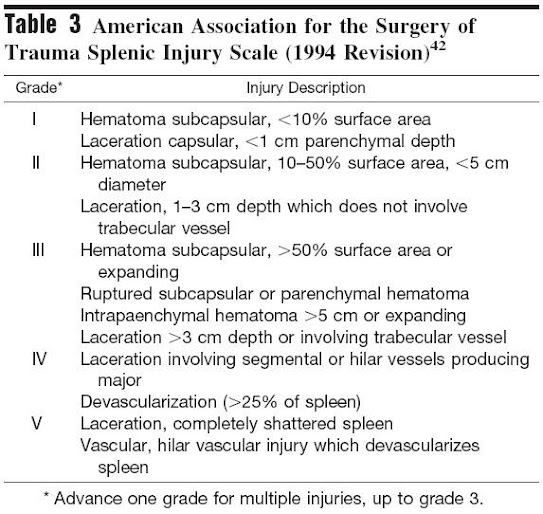
    Management of Adult Blunt Splenic Trauma

    Western Trauma Association (WTA) Critical Decisions in Trauma:  Management of Adult Blunt Splenic Trauma J Trauma. November 2008;65:1007–1011.

    2010年9月17日 星期五

    Wound Management


    Wound Management
    Emerg Med Clin North Am, 2007;25: 873–899

    Goal of Wound Management
    • Providing painless, quick wound closure
    • Excellent cosmetic result
    • Avoiding infection
    Contaminated wounds
    • mammalian bites, human bites, 
    • wounds incurred in submerged bodies of water (eg, streams, lakes, ponds). 
    • “ old” wounds, high level of bacteria 6 to 8 hours after wounding.
    Golden Period for Wounds Repair
    • The accepted interval from injury to wound closure is up to 6 hours for wounds to the extremities and up to 24 hours for face and scalp wounds.
    Tetanus-Prone Wounds 
    • Age of wound > 6 hours
    • Stellate wound or avulsion
    • Depth of wound >1 cm, mechanism of injury is a missile, crush, burn, or frostbite
    • Signs of infection
    • Devitalized tissue
    • Presence of contaminants (dirt, feces, soil, or saliva)
    • Presence of denervated or ischemic tissue
    Physical Examination
    • Location
    • Length in centimeters
    • Neurovascular examination
    • Motor examination
    • Exploration for tendon or joint involvement
    • Presence of foreign body
    Wound Preparation
    High-pressure irrigation
    • Recommended irrigation pressure is 5 to 8 psi which can be achieved by using a 30 to 60 ml syringe and a 19 gauge needle or splash shield
    • Use 50 to 100 ml of irrigant per cm of laceration
    • If saline is not available for irrigation, tap water may be a good alternative
    • Detergents, hydrogen peroxide, and concentrated povidone-iodine should be avoided in wound irrigation
    Types of Wound Closure
    • Primary closure is closure of the wound before formation of granulation tissue.
    • All “clean” wounds can be closed primarily.
    • Delayed primary closure can be performed after 3 to 5 days to allow the patient's defense system to decrease the bacterial load.
    • Secondary closure is healing by granulation tissue. This type of closure is suited for partial-thickness avulsions (ie, fingertip injuries), contaminated small wounds (ie, puncture wounds, stab wounds), and infected wounds.
    Techniques of Wound Closure 
    • When the goal is to obtain the best function, the laceration should be closed in a single layer with the least amount of sutures.
    • When cosmesis is most important, a multiple-layer closure should be used.

    Oral Cavity and Mucous Membranes
    • Lacerations of the buccal mucosa and gingiva generally heal without repair.
    Face
    • With cheek lacerations, there is potential for injury to the parotid gland and to the 7-th cranial nerve.
    Bites

    Gunshot Wounds
    • Wounds caused by bullets should be debrided, irrigated, and left open to be repaired with delayed primary closure or by secondary closure.

    2010年9月14日 星期二

    ACC/AHA 2007 Guidelines for UA/NSTEMI


    ACC/AHA 2007 Guidelines for the Management of Patients with Unstable Angina/Non-ST-Elevation Myocardial Infarction  Circulation. 2007;116;e148-e304 J. Am. Coll. Cardiol. 2007;50;652-726  Initial Evaluation and Management of UA/NSTEMI  Clinical Assessment
    • 12-lead ECG should be performed and shown to EP as soon as possible, with a goal of within 10 min of ED arrival for all patients with chest discomfort or symptoms suggestive of ACS.
    • If initial ECG is not diagnostic but patient remains symptomatic and there is high clinical suspicion for ACS, serial ECGs, initially at 15- to 30-min intervals, should be performed to detect the potential for development of ST-segment elevation or depression. 
    Early Risk Stratification TIMI Risk Score
    • Age ≥ 65 years
    • At least 3 risk factors for CAD (family history of CAD, hypertension, hypercholesterolemia, diabetes, or current smoker)
    • Prior coronary stenosis of ≥ 50%
    • ST-segment deviation on ECG
    • At least 2 anginal events in prior 24 hours
    • Use of aspirin in prior 7 days
    • Elevated serum cardiac biomarkers 
    GRACE risk score
    Selection of Initial Treatment Strategy Initial Invasive versus Conservative Strategy Invasive
    • Recurrent angina/ischemia at rest with low-level activities despite intensive medical therapy
    • Elevated cardiac biomarkers (TnT or TnI)
    • New/presumably new ST-segment depression
    • Signs/symptoms of HF or new/worsening MR
    • High-risk findings from noninvasive testing
    • Hemodynamic instability
    • Sustained VT 
    • PCI within 6 months 
    • Prior CABG 
    • High risk score (e.g., TIMI, GRACE)
    • Reduced left ventricular function (LVEF < 40%)
    Conservative
    • Low risk score (e.g., TIMI, GRACE)
    • Patient/physician presence in the absence of high-risk features 
    Stepped-Care Approach to Pharmacological Therapy for Musculoskeletal Symptoms with Known Cardiovascular Disease or Risk Factors for Ischemic Heart Disease
       

    ED Management Strategies: Guidelines at a Glance

    2010年9月9日 星期四

    Guidelines for Inter- and Intra-Hospital Transport of Critically Ill Patients


    Guidelines for the inter- and intra-hospital transport of critically ill patients
    Critical Care Medicine
    Volume 32(1), January 2004, pp 256-262

    Intra-Hospital Transport
    • Before transport, the receiving location confirms that it is ready to receive the patient for immediate procedure or testing.
    • Documentation in the medical record includes the indications for transport and patient status throughout the time away from the unit of origin.
    • It is strongly recommended that a minimum of two people accompany a critically ill patient.
    • It is strongly recommended that a physician with training in airway management and ACLS, and critical care training or equivalent, accompany unstable patients.
    • Equipment for airway management, sized appropriately for each patient, is also transported with each patient.
    • For practical reasons, bag-valve ventilation is most commonly employed during intra-hospital transports.
    Inter-Hospital Transport
    • Once transfer decision has been made, the transfer is effected as soon as possible.
    • Resuscitation and stabilization will begin before the transfer, realizing that complete stabilization may be possible only at the receiving facility.
    • The informed consent process includes a discussion of the risks and benefits of transfer. These discussions are documented in the medical record before transfer. 
    • A copy of the medical record, including a patient care summary and all relevant laboratory and radiographic studies, will accompany the patient.
    • The preparation of records should not delay patient transport.
    • It is recommended that a minimum of two people, in addition to the vehicle operators, accompany a critically ill patient during inter-hospital transport.
    • When transporting unstable patients, the transport team leader should be a physician or nurse preferably with additional training in transport medicine. For critical but stable patients, the team leader may be a paramedic.
    • These individuals provide the essential capabilities of advanced airway management, intravenous therapy, dysrhythmia interpretation and treatment, and BLS and ACLS.
    • In the absence of a physician team member, there will be a mechanism by which the transport team can communicate with a command physician.
    • Patient status and management during transport are recorded and filed in the patient medical record at the referring facility. Copies are provided to the receiving institution.
    • Referring facilities will, before transport, begin appropriate evaluation and stabilization to the degree possible to ensure patient safety during transport.
    • Non-essential testing and procedures will delay transfer and should be avoided. 
    • A patient should not be transported before airway stabilization.
    • If indicated, chest decompression with a chest tube is accomplished before transport.
    • Medical record checklist should include documentation of initial medical evaluation and stabilization (to the degree possible), informed consent disclosing benefits and risks of transfer, medical indications for the transfer, and physician-to-physician communication with the names of the accepting physician and the receiving hospital.

    2010年9月4日 星期六

    醫院轉診


    醫療法

    第60條
    • 醫院、診所遇有危急病人,應先予適當之急救,並即依其人員及設備能力予以救治或採取必要措施,不得無故拖延。 前項危急病人如係低收入或路倒病人,其醫療費用非本人或其扶養義務人所能負擔者,由直轄市、縣 (市) 政府社會行政主管機關依法補助之。
    第73條
    • 醫院、診所因限於人員、設備及專長能力,無法確定病人之病因或提供完整治療時,應建議病人轉診。但危急病人應依第六十條第一項規定,先予適當之急救,始可轉診。 前項轉診,應填具轉診病歷摘要交予病人,不得無故拖延或拒絕。

      緊急救護辦法

      第5條
      • 緊急傷病患之運送就醫服務,應送至急救責任醫院或就近適當醫療機構。緊急傷病患本人或其隨從家屬要求送至前項以外其他醫療機構者,得依緊急醫療救護法施行細則第十二條規定收取費用。

        外傷病患轉院安全作業    黃正金 台灣醫界 2008, Vol.51, No.1
        • 不要造成進一步的傷害。
        • 初步治療的醫師必須對自身能力、醫院後線醫師支援能力以及轉院相關條件有明確的認知。
        • 轉診醫師與接受轉診醫師應該直接聯絡並互相溝通。
        • 負責轉送人員必須受過適當訓練以處理轉送過程可能發生之狀況。
        轉院前的確認清單
        • Airway:氣管內插管與否、頸椎之保護
        • Breathing :氧氣的給予、動脈血氧、吐氣末端二氧化碳監測、胸管置入
        • Circulation :輸液、輸血、藥物
        • Diagnostic :基本三張X光檢查(胸腔、頸椎側面、骨盆)、實驗室檢查
        • Equipment :各項監視系統、導管置入、石膏夾板
        • Family :是否有家屬伴隨
        • Gastric tube :胃管引流
        • Handover :交接事項的完整性

        2010年9月1日 星期三

        2010 Guidelines for Management of Spontaneous ICH


        AHA/ASA Guideline for the Management of Spontaneous Intracerebral Hemorrhage
        Stroke September 1, 2010;41:2108-29

        Emergency Diagnosis and Assessment of ICH
        • Rapid neuroimaging with CT or MRI is recommended to distinguish ischemic stroke from ICH (Class I; Level of Evidence: A).
        • CT angiography and contrast CT may be considered to help identify patients at risk for hematoma expansion (Class IIb; Level of Evidence: B), and CT angiography,CT venography,contrast-enhanced CT, contrast MRI, MRA, and magnetic resonance venography can be useful to evaluate for underlying structural lesions,including vascular malformations and tumors when there is clinical or radiological suspicion (Class IIa; Level of Evidence: B).(New recommendation)

        Medical Treatment of ICH
        • Patients with a severe coagulation factor deficiency or severe thrombocytopenia should receive appropriate factor replacement therapy or platelets, respectively (Class I; Level of Evidence:C). (New recommendation)
        • Patients with ICH whose INR is elevated due to on oral anticoagulants (OACs) should have their warfarin withheld, receive therapy to replace vitamin K-dependent factors and correct the INR, and receive intravenous vitamin K (Class I; Level of Evidence: C).
        • rFVIIa does not replace all clotting factors, and although the INR may be lowered, clotting may not be restored in vivo; therefore, rFVIIa is not routinely recommended as a sole agent for OAC reversal in ICH (Class III;Level of Evidence: C). (Revised from the previous guideline).
        Suggested Recommended Guidelines for Treating Elevated Blood Pressure in Spontaneous ICH (Class IIb, Level of Evidence C)
        • If SBP >200 mmHg or MAP >150 mmHg, then consider aggressive reduction of BP with continuous intravenous infusion, with frequent BP monitoring every 5 minutes.
        • If SBP >180 mmHg or MAP >130 mmHg and there is evidence of or suspicion of elevated ICP, then consider monitoring ICP and reducing BP using intermittent or continuous intravenous medications to keep cerebral perfusion pressure > 60-80 mmHg.
        • If SBP >180 mmHg or MAP >130 mmHg and there is not evidence of or suspicion of elevated ICP, then consider a modest reduction of BP (eg, MAP of 110 mmHg or target BP of 160/90 mmHg) using intermittent or continuous intravenous medications to control BP, and clinically reexamine the patient every 15 minutes.
        • In patients presenting with SBP 150-220 mmHg, acute lowering of SBP to 140 mmHg is probably safe (Class IIa; Level of Evidence: B). (New recommendation)
        Management of Glucose
        • Glucose should be monitored and normoglycemia (range 80 to 110 mg/dL) is recommended(Class I: Level of Evidence: C). (New recommendation)
        Seizures and Antiepileptic Drugs
        • Clinical seizures should be treated with antiepileptic drugs(Class I; Level of Evidence: A). (Revised from the previous guideline) Continuous EEG monitoring is probably indicated in ICH patients with depressed mental status out of proportion to the degree of brain injury (Class IIa; Level of Evidence:B). Prophylactic anticonvulsant medication should not be used (Class III; Level of Evidence:B). (New recommendation)
        Procedure/Surgery
        • Patients with a GCS of 8, those with clinical evidence of transtentorial herniation, or those with significant IVH or hydrocephalus might be considered for ICP monitoring and treatment. A cerebral perfusion pressure of 50 to 70 mmHg maybe reasonable to maintain depending on the status of cerebral autoregulation (Class IIb; Level of Evidence: C). (New recommendation)
        • Ventricular drainage as treatment for hydrocephalus is reasonable in patients with decreased level of consciousness(Class IIa;Level of Evidence: B). (New recommendation)
        Clot Removal
        • For most patients with ICH, the usefulness of surgery is uncertain (Class IIb; Level of Evidence: C). (New recommendation). Specific exceptions to this recommendation follow:
        • Patients with cerebellar hemorrhage who are deteriorating neurologically or who have brainstem compression and/or hydrocephalus from ventricular obstruction should undergo surgical removal of the hemorrhage as soon as possible (Class I; Level of Evidence:B). (Revised from the previous guideline) Initial treatment of these patients with ventricular drainage alone rather than surgical evacuation is not recommended (Class III; Level of Evidence: C). (New recommendation)
        • For patients presenting with lobar clots >30 mL and within 1 cm of the surface, evacuation of supratentorial ICH by standard craniotomy might be considered (Class IIb; Level of Evidence:B). (Revised from the previous guideline)
        Prevention of Recurrent ICH
        • In situations where stratifying a patient’s risk of recurrent ICH may affect other management decisions, it is reasonable to consider the following risk factors for recurrence: lobar location of the initial ICH, older age, ongoing anticoagulation, presence of the apolipoprotein E ε2 or ε4 alleles, and greater number of microbleeds on MRI (Class IIa; Level of Evidence:B). (New recommendation)
        • After the acute ICH period, absent medical contraindications, BP should be well controlled, particularly for patients with ICH location typical of hypertensive vasculopathy (Class I;Level of Evidence: A). (New recommendation)
        • After the acute ICH period, a goal target of a normal BP of <140/90 mmHg (<130/80 mmHg if diabetes or chronic kidney disease) is reasonable (Class IIa; Level of Evidence: B). (New recommendation)
        • Avoidance of long-term anticoagulation as treatment for non-valvular atrial fibrillation is probably recommended after spontaneous lobar ICH because of the relatively high risk of recurrence (Class IIa; Level of Evidence: B).